
A house with history
A home with a story, rooted in Ibiza for generations
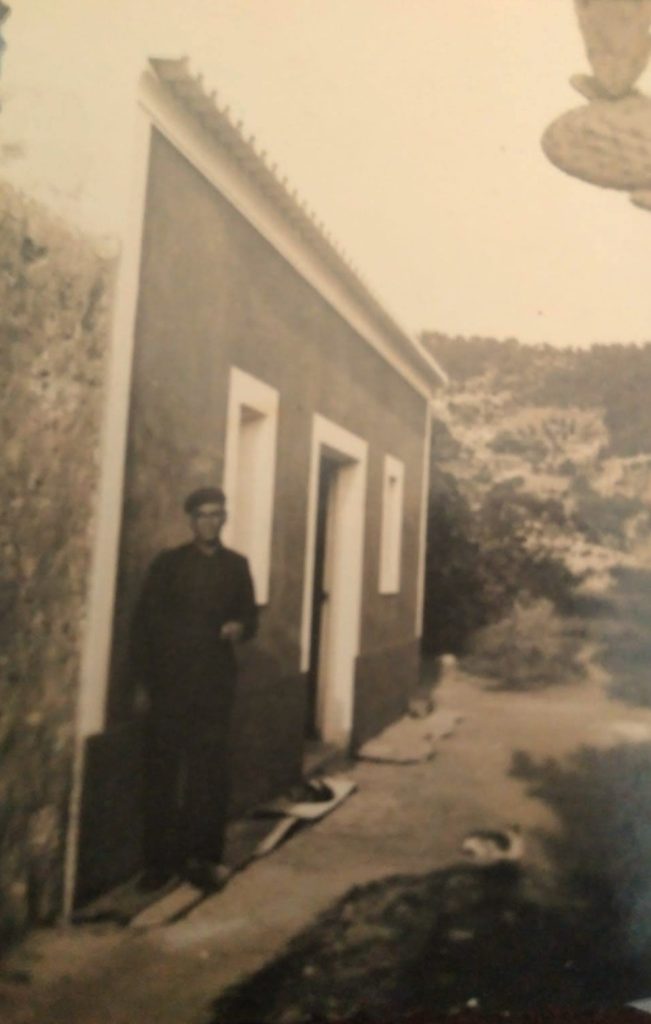
My grandfather, José Ramon, at Can Pep Pardal, many years ago. A piece of our family history
Until not so long ago, living in Ibiza was difficult and, at times, dangerous. For centuries, the island suffered attacks and raids from peoples arriving by sea, who devastated everything in their path: farmland, animals, homes, and even the island’s inhabitants, many of whom were taken captive. The only safe refuges were the traditional Ibizan farmhouses, known as palau pagès, the defensive watchtowers, and the fortified churches of Sant Miquel, Sant Antoni, Santa Eulària and Sant Jordi.
All of this shaped the traditional Ibizan architecture that still defines the island’s landscape today. The farmhouses were built solid and strong, some even with watchtowers where families would shelter while waiting for the attacks to end. The churches featured defensive systems more typical of fortresses and castles than places of worship. Their thick stone walls, sometimes almost two metres wide, were built by the neighbours themselves, joining forces and labour with one common purpose: protection.
Can Pep Pardal has more than 150 years of history. Although the house was built after those centuries marked by pirates and raids, it still reflects the memory of that fear and of the Ibiza that has now almost disappeared. Its thick stone walls, over one metre wide in some parts, traditional wooden ceilings, and small exterior windows respond to an architecture designed both for protection and for adapting to the island’s climate. Thanks to this, the house remains naturally cool and ventilated during the summer months and warm in winter. A function it still fulfils perfectly more than a century later.
For many years, Ibiza was a humble and deeply rural island, and Port de Sant Miquel was no exception. Life depended on the land, the animals, and the support between neighbours, who made the hardships of daily life a little easier to bear. Until relatively recently, Can Pep Pardal was a farmhouse entirely dedicated to traditional rural life, with cultivated land and animals such as rabbits, pigs and sheep.
Today, despite tourism and the fast pace that sometimes invades the island, the essence of that peaceful and authentic Ibiza can still be felt within the house and throughout its surroundings. The large wooden entrance door, which, according to family stories, came from the very same tree that provided the wood for the doors of the fortified church of Sant Miquel, though perhaps we will never know whether this is truth or legend, leads directly into the porxo, the central space of the traditional Ibizan home.
Long before electricity or television arrived, the porxo was the place where family members and neighbours gathered together to work and share everyday life. Here they made espardenyes, senallons, esparto crafts, dried figs, xereques, and many other handmade essentials of a life deeply connected to the land. At sunrise, work continued in the fields, caring for the fruit trees and cultivating what was necessary to live.
Today, Can Pep Pardal offers all the comforts needed for a relaxing stay, while preserving the character, authenticity and essence that have shaped its history for generations.
If you would like to experience a different side of Ibiza, more authentic, peaceful and timeless, do not hesitate to get in touch. I will be delighted to welcome you to this small haven of peace that has been my family’s home for more than 150 years.
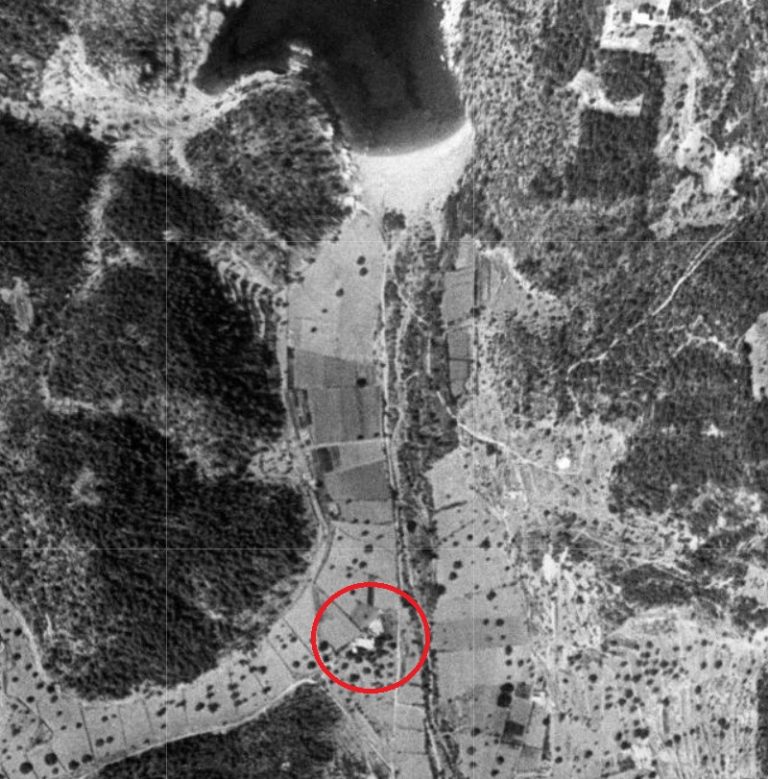
Can Pep Pardal was one of the only constructions in Port de Sant Miquel (picture from 1956).
Ready to book your stay?
Contact us directly on WhatsApp for the best price and a personal, hassle-free experience